
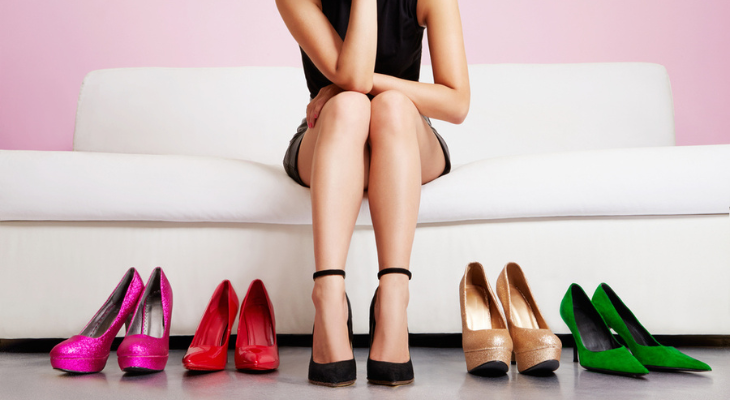
How Wearing High-Heeled Shoes Can Lead to Scoliosis
Aching feet aren't the only downside to wearing high heels. If heels are your go-to shoe, you may be at risk for developing scoliosis, a painful condition that affects the curvature of your spine. Choosing lower-heeled shoes and visiting your chiropractor could lower your scoliosis risk or help ease your pain if you already have the condition.
What Is Scoliosis?
Scoliosis occurs due to an abnormal curvature of the spine. When viewed from behind, a normal spine looks straight, although it actually it has a few curves that support your body. If you're diagnosed with scoliosis, your spine may look like a "C" or "S" instead of a straight line.
The condition is often diagnosed in teenagers, but people of any age can develop scoliosis. Any activity that stresses your spine or the tissues that support it, like wearing high heels, can increase your risk for developing scoliosis.
In addition to a curved spine, one side of the rib cage or one shoulder may protrude more than the other. Additional symptoms include:
- Back, Neck, Hip, Rib, or Shoulder Pain
- Headaches
- Uneven Shoulders or Hips
- Sciatica
- Weak Muscles
- Muscle Spasms and Soreness
- Numbness in Legs, Feet, Hands, and Arms
- Difficulty Standing or Sitting for Long Periods
- Leg Length Differences
- Posture Changes
How Can High-Heels Cause Scoliosis?
Wearing high heels changes the way you stand and walk and changes your center of gravity. Heels are designed to slope downward, increasing pressure on the front of your feet. The slope may cause foot pain, alter the alignment of your knees, hips, and back, and cause you to arch your back when walking. Muscles and tissues that support your spine may tighten as a result of your new posture. Eventually, the changes could cause spinal misalignments or affect the curvature of your spine.
High heels also stress the tissues and joints in your knees, hips, and back. Frequent high-heel wear could increase your risk for scoliosis and other conditions, like plantar fasciitis, Achilles tendinitis, and knee and hip arthritis.
In a study published in the American Journal of Physical Medicine and Rehabilitation, researchers reported that wearing high heels could affect the spinal muscles and the pelvis. An increase in spinal muscle activity may cause muscle overuse and low back problems, while a lower pelvic range of motion tightens tissues in the pelvis and lower back.
European researchers noted women who wore high heels tended to bend their knees and ankles more than normal. In some cases, the changing center of gravity that occurred with high heel wear affected the curvature of the vertebrae in the neck, according to the study, which appeared in the European Spine Journal.
What Can Your Chiropractor Do to Help?
Chiropractic care offers several benefits that could help you avoid scoliosis or reduce painful symptoms. Treatment options may include:
- Heat and Ice Therapies. Ice decreases pain and inflammation, while heat relaxes tissues. These therapies may be offered before or after other chiropractic treatments.
- Spinal Manipulation. This treatment improves pain by correcting misalignments in your spine. When your spine is correctly aligned, tight muscles, ligaments, and tendons relax. The treatment can also improve the range of motion and flexibility of your back.
- Massage. Massage stretches and soothes tight muscles and tissues and eases pain and spasms. Have you ever noticed that you feel incredibly relaxed after a massage? The hands-on therapy spurs the production of hormones that relieve pain naturally, while enhancing relaxation and improving mood.
- Ultrasound. Ultrasound isn't just a diagnostic tool. Chiropractors use ultrasound waves to heat and relax deep tissues. The therapy also improves blood circulation and lowers inflammation.
- Other Therapies. Your chiropractor may use soft tissue mobilization or myofascial tissue release to release knots in muscles, or recommend transcutaneous electrical nerve stimulation to stop pain signals from traveling to your brain.
You can also take a few steps to ease your symptoms, including:
- Performing the Daily Stretches and Exercises Recommended by Your Chiropractor
- Choosing Shoes with One- to Two-Inch Heels and Limiting High Heels to Special Occasions
- Wearing Platform Shoes That Distribute Pressure More Evenly Than Stiletto Heels
Are you struggling with scoliosis pain? Call our office to schedule a convenient appointment with the chiropractor.
Sources:
PubMed: American Journal of Physical Medicine Rehabilitation: The Effect of Walking in High- and Low-Heeled Shoes or Erector Spinae Activity and Pelvis Kinematics During Gait, 5/2012
https://pubmed.ncbi.nlm.nih.gov/22311060/
European Spine Journal: Influence of High-Heeled Shoes on the Sagittal Balance of the Spine and the Whole Body, 11/2016
https://pubmed.ncbi.nlm.nih.gov/27206516/
American Association of Neurological Surgeons: Scoliosis
https://www.aans.org/Patients/Neurosurgical-Conditions-and-Treatments/Scoliosis
Scientific Research: Open Journal of Therapy and Rehabilitation: Chiropractic Rehabilitation of a Scoliosis Family: Results from a 9-Year Follow-Up, 2/2017
https://www.scirp.org/journal/paperinformation.aspx?paperid=73851
American Osteopathic Association: A Dance Medicine Doctor Tackles High Heel Harm
https://osteopathic.org/what-is-osteopathic-medicine/the-real-harm-in-high-heels/